Wall art is one of those purchases where the sticker price and the real price are rarely the same number. A poster can look like a bargain at checkout and quietly cost three times as much by the time it’s actually hanging on your wall. Or it can look expensive up front and turn out to be the cheaper choice over the years you own it.
So “how much should I spend?” isn’t really a single question — it’s a question about value, durability, and all the hidden extras nobody mentions when you’re admiring a design online. This guide breaks down what wall art actually costs, where the sneaky expenses hide, and how to think about getting your money’s worth rather than just chasing the lowest price tag.
The Hidden Cost Trap of “Cheap” Paper Prints
Let’s start with the most common budget mistake: assuming a cheap paper print is a cheap finished piece. It almost never is.
A $15 paper poster is just an image on thin stock. To get it onto your wall looking intentional rather than taped-up-dorm-room, you typically need to add a few things. A frame, first — and a decent one in the right size is rarely cheap, with custom or larger sizes climbing fast. Then often a mat board to set the image off properly, and backing to keep it flat. Glass or acrylic glazing to protect it. Maybe professional framing if the size is non-standard, which can cost more than the art itself.
Add it up and that “$15 bargain” can quietly become a $75–$150 finished object once it’s framed and ready to hang. None of those extras were optional if you wanted it to look good — they were just invisible at the moment you clicked buy. This is the trap: paper is cheap, but a finished, wall-ready paper piece often isn’t.
The Value Spectrum of Modern Wall Art
It helps to think of wall art in tiers, because each one trades cost against effort, durability, and finish quality differently.
Tier 1 — Digital downloads and DIY. The cheapest entry point. You buy a digital file for a few dollars and print it yourself. Genuinely budget-friendly, and fine for a quick refresh — but the burden of printing, sizing, and framing is entirely on you, and home-printed quality varies a lot. The low price comes with the most work and the least consistency.
Tier 2 — Premium direct-to-material prints. The middle of the spectrum, and the sweet spot for most people. Here the image is printed straight onto a finished, ready-to-hang material — metal, canvas, or acrylic — with no separate framing step. You pay more than for a bare paper print, but the price is the whole price: nothing extra to buy, nothing to assemble. Metal posters live here, arriving ready to mount with no frame required.
Tier 3 — Gallery and fine-art pieces. Original works, limited editions, or high-end large-format prints. This is where prices climb into the hundreds and beyond. Worth it if you’re collecting or want a genuine centerpiece, but overkill if you simply want a room to look great.
Most people are happiest in Tier 2. It skips the hidden-cost trap of Tier 1’s framing and the steep entry of Tier 3, and what you pay is genuinely what you get.
Frame-Free Decorating and the Value of Durability
Here’s the part of the cost equation almost everyone forgets: a piece of wall art isn’t a one-time purchase that stays static. It sits on your wall for years, and some materials hold up over those years far better than others.
Cheap paper and canvas are vulnerable to the everyday conditions of a real home. Humidity makes paper buckle and can encourage mold; sunlight fades inks; canvas can sag or absorb odors over time; and once any of that happens, the only fix is replacing the piece. A bargain you have to rebuy every few years isn’t really a bargain.
This is where frame-free, durable materials earn their higher upfront price. Metal posters are a good example: there’s no frame to buy because the piece is complete as-is, the surface resists moisture and warping, and because the image is fused into the metal rather than printed on top, it stays vivid far longer than paper under the same conditions. Spread the cost over the years you’ll actually own it, and the “expensive” option often works out cheaper per year than the cheap one you keep replacing.
It’s the same logic as buying good shoes: the lowest price and the best value are frequently two different products.
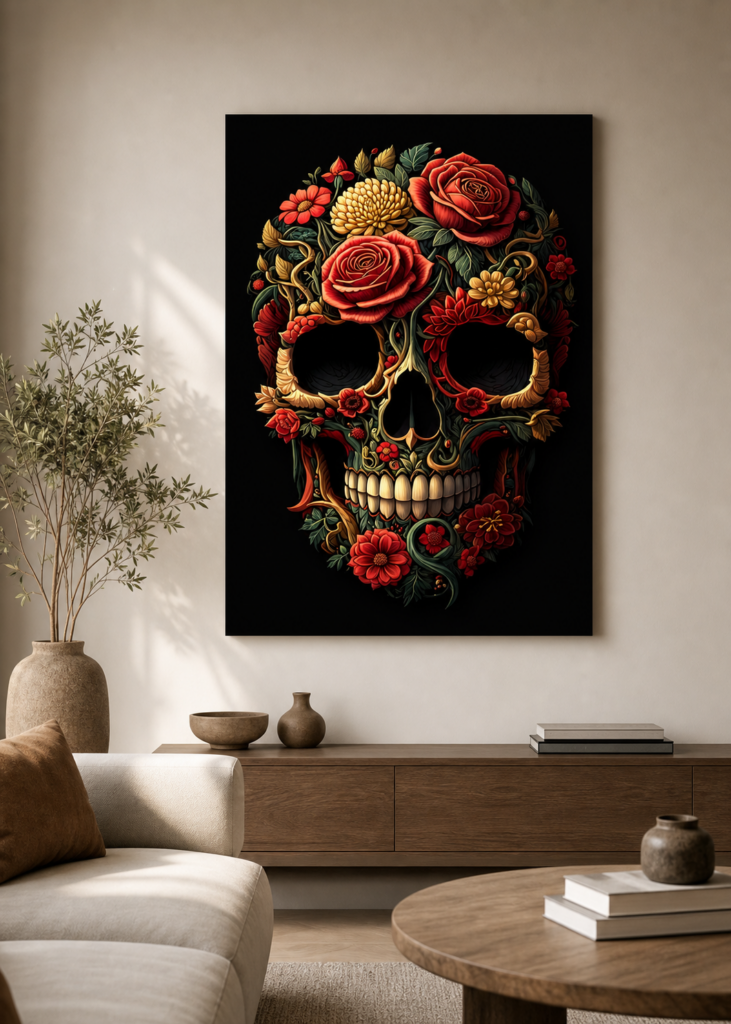
A premium, direct-to-material print like this striking floral skull provides a high-impact centerpiece completely frame-free, helping you bypass the sneaky hidden costs of custom framing.
This is our own design on Displate — buying through our link earns us a small commission at no extra cost to you. Details
👉 View this design on Displate
So, What Should You Actually Spend?
There’s no single right number, but there is a right approach: budget for the finished, wall-ready piece, not just the image. A genuinely cheap print that needs $100 of framing isn’t cheap, and a pricier ready-to-hang piece that lasts a decade without maintenance often isn’t expensive.
For most rooms and most people, a mid-tier, direct-to-material print is the practical sweet spot — no hidden framing costs, no ongoing upkeep, and a price that reflects the whole object rather than a starting point. Decide what the wall is worth to you over the next several years, and you’ll find the right number falls out naturally.
Once you’ve settled on a budget, the next decision is usually material — our guide on metal posters vs paper prints digs into which is genuinely worth it, and if you want to get the dimensions right before you buy, see how to choose the right wall art size for any room.
Published 06/19/2026 · Last updated 06/20/2026