There’s a reason animal and wildlife art has endured across every era of design, from cave paintings to modern minimalist prints. A striking animal image carries an immediate emotional charge — power, grace, calm, wildness — that few other subjects can match. A single great wildlife piece can become the soul of a room.
But that same power is exactly what makes animal art tricky to style. A bold tiger or a soaring eagle commands attention, and if you place it carelessly, it can dominate a space and throw everything else off balance. The art of using wildlife pieces well is learning to harness that intensity rather than letting it take over. Done right, an animal print becomes a confident focal point that pulls a room together instead of fighting it.
Why Animal Art Hits Differently
Humans are wired to respond to animals. We instinctively read their posture, gaze, and energy, which means a wildlife piece engages a viewer on a deeper, almost primal level than an abstract pattern or a landscape does.
That’s a gift and a responsibility. The emotional weight means a single animal piece can do the work of several lesser decorations — but it also means the mood of the animal sets the mood of the room. A serene, resting creature brings calm; an alert, powerful predator brings energy and drama. Before choosing a piece, it helps to decide what feeling you want the space to have, then pick an animal whose energy matches it.
Match the Animal’s Energy to the Room
The single most useful principle for styling wildlife art is to align the animal’s energy with the room’s purpose.
High-energy, powerful subjects — a prowling tiger, a proud horse, a bird of prey mid-flight — bring intensity and movement. These belong in rooms where energy is welcome: a living room, an entryway, a home gym, or a creative studio. They make bold statements and reward spaces with enough room to let them breathe.
Calm, gentle subjects — a resting deer, a perched bird, a fox curled in the grass — carry stillness and warmth. These suit quieter rooms where you want a softer presence: bedrooms, reading nooks, or a cozy corner.
Getting this match right is what separates art that energizes a room from art that quietly unsettles it. A fierce predator staring down at a bed can feel restless; the same piece in a living room feels magnificent.
Let a Bold Piece Be the Star
When you choose a dramatic animal print, the most common mistake is surrounding it with competition. A powerful horse or eagle wants to be the centerpiece — so let it.
Give it a calm backdrop. A neutral or muted wall lets the animal’s color and detail pop without visual noise behind it. Resist the urge to flank it with other busy artwork; a strong wildlife piece almost always looks more sophisticated standing alone than crowded into a gallery wall.
Keep the surrounding décor quieter, too. If the art is the loud element, let the furniture and accessories play a supporting role in calmer tones. This is the design principle of contrast: one bold focal point reads as intentional and confident, while several competing bold elements read as chaotic.
A practical sizing note: a statement animal piece generally wants to fill a good portion of its wall — roughly two-thirds of the available width — so it has the presence to anchor the room rather than floating awkwardly.
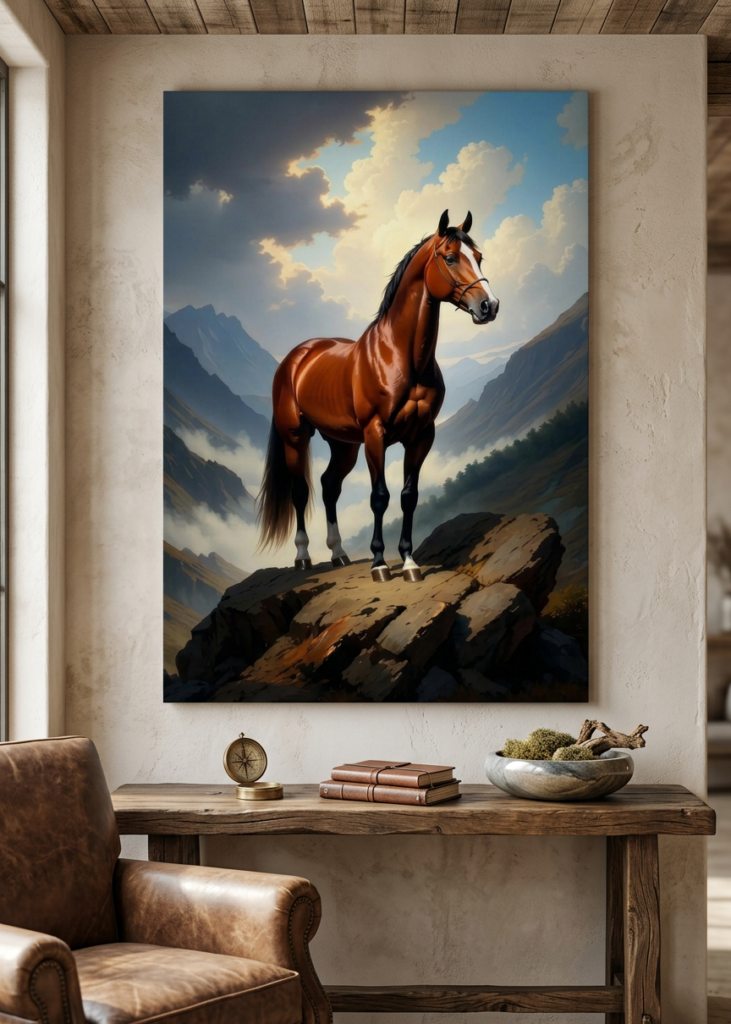
A powerful animal piece thrives as the star of a room — give it a calm backdrop and let it command attention without competition.
This is our own design on Displate — buying through our link earns us a small commission at no extra cost to you. Details
👉 View this design on Displate
Use Color to Tie It Into the Room
A wildlife piece doesn’t have to clash with your existing palette — in fact, the best ones echo it. Look at the dominant colors in the artwork and find a way to repeat one of them elsewhere in the room: a cushion, a throw, a plant, a vase. That small echo makes the bold piece feel like it belongs rather than like it was dropped in from another world.
Warm-toned animals — a russet fox, a golden lion, an amber-eyed owl — pair beautifully with earthy, cozy palettes. Cooler or vivid wildlife imagery — a green parrot, a misty wolf, a blue-toned bird — sits comfortably in spaces that pick up those same tones. Tying the art to your room through a single repeated color is the simplest trick for integration.
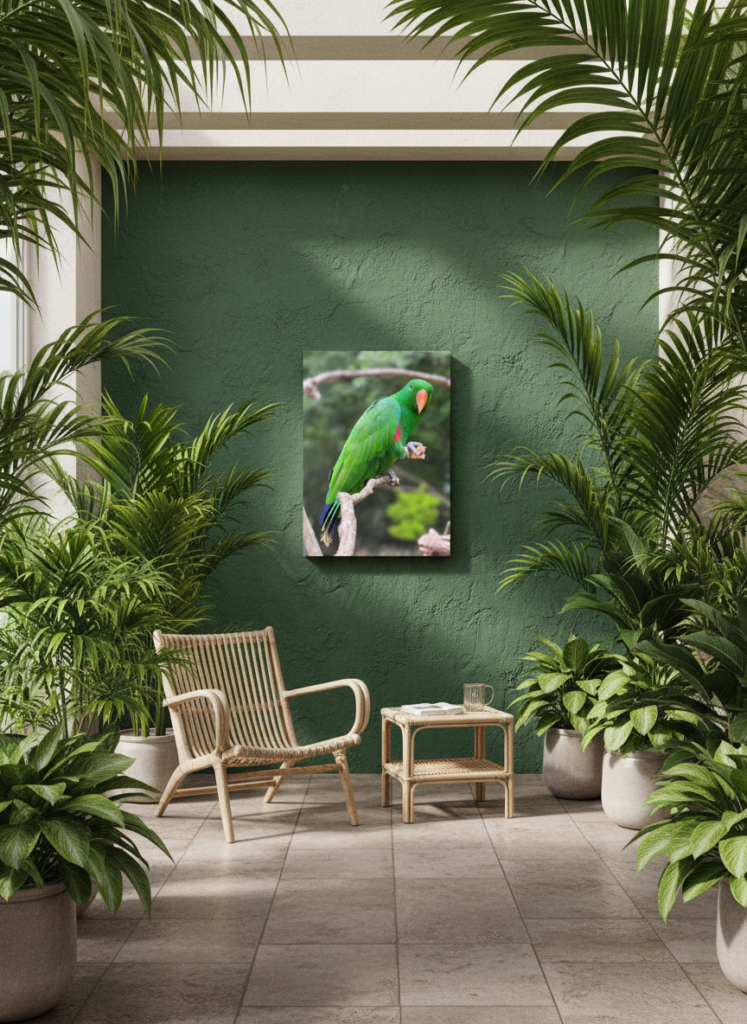
Echoing the artwork’s color in the room — like this green parrot against leafy tones — helps a wildlife piece feel integrated rather than dropped in.
This is our own design on Displate — buying through our link earns us a small commission at no extra cost to you. Details
👉 View this design on Displate
When to Go Subtle Instead
Not all animal art has to roar. Stylized, minimalist, or illustrative wildlife pieces offer the charm of the subject with a fraction of the visual weight — perfect when you want the idea of an animal without a dramatic centerpiece.
A simple line-art bird, a geometric stag, or a soft watercolor creature brings personality and warmth while blending gently into a refined space. These subtler pieces are ideal for rooms that are already richly decorated, or for anyone who loves animals but prefers a calmer, more contemporary look. They’re also wonderful in sets — a trio of minimalist animal prints can create a cohesive, gallery-like feel without overwhelming a wall.
A Few Quick Styling Tips
Give powerful pieces space — don’t crowd a dramatic animal into a tight corner; it needs a little breathing room to feel like a statement.
Mind the gaze. An animal looking into the room tends to feel inviting and draws the eye inward, while one staring directly out can feel confrontational up close — worth considering for the spot you’ll look at most.
Lean on matte finishes for high-detail wildlife. A matte surface keeps intricate fur, feathers, and texture readable without glare, especially in bright rooms.
And trust your instinct on connection. Animal art is personal — the piece you genuinely feel drawn to will always look better in your home than the one you chose only because it “matched.”
Bringing It All Together
Styling animal and wildlife art comes down to respecting its power: match the animal’s energy to the room’s purpose, give bold pieces a calm backdrop so they can shine, tie the artwork into your palette with a repeated color, and reach for subtler stylized pieces when you want personality without drama. Handle that intensity thoughtfully and a wildlife piece becomes the most characterful thing in the room — a true centerpiece with a pulse.
To coordinate your wildlife piece with your existing décor, see how to choose wall art colors that match your room. And for styling calmer animal pieces in a restful space, calming wall art ideas for a restful bedroom is a natural companion read.
Published 06/15/2026 · Last updated 06/16/2026